


Harmonizing Data.
Revolutionizing Workflow.
What HarmoniX Does
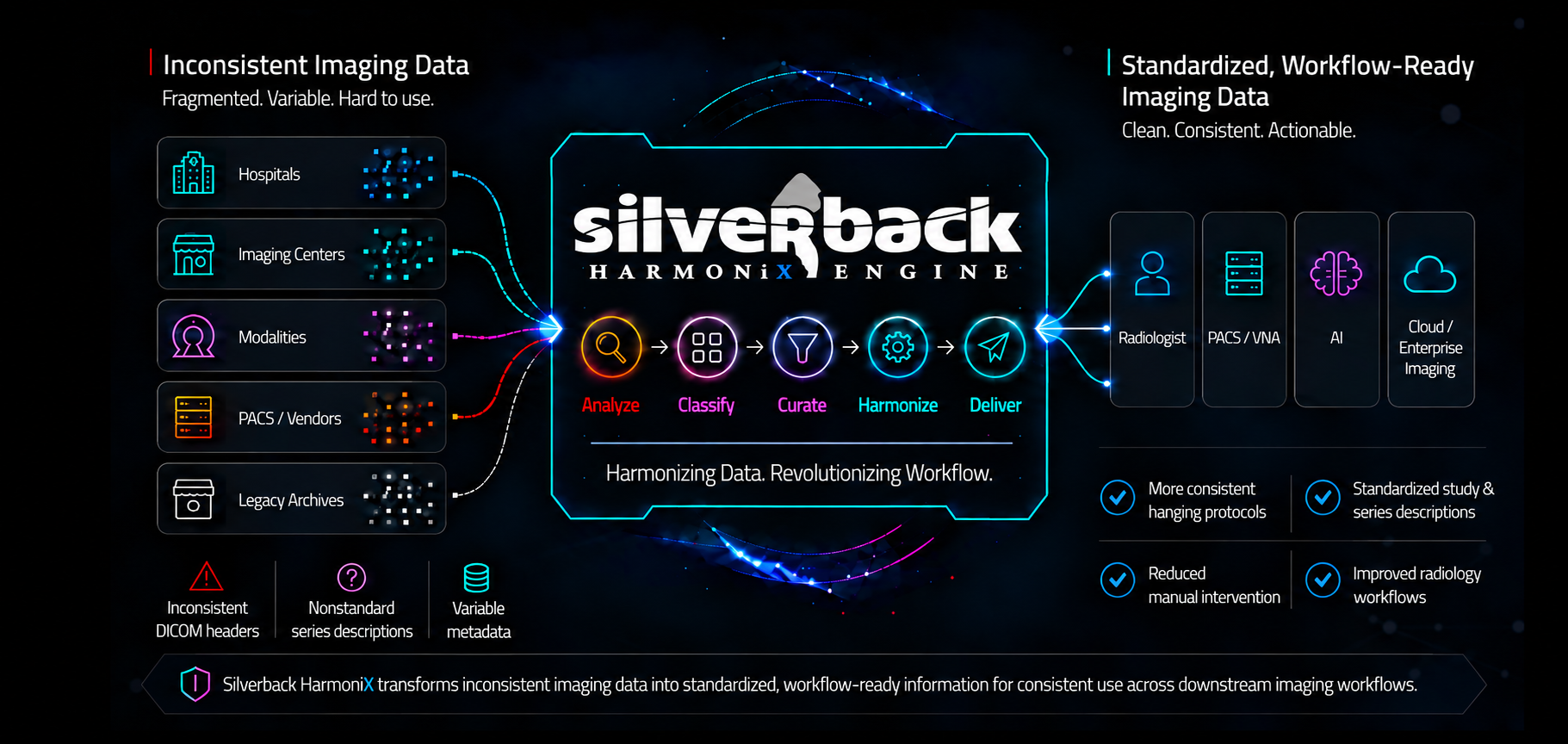
HarmoniX applies layered intelligence to identify and classify imaging studies and series, then generates configurable descriptions designed to support clinical and operational workflows across the imaging enterprise.
Harmonizes inconsistent DICOM study and series descriptions
Identifies and classifies imaging studies and series using layered intelligence that combines advanced algorithms and pattern recognition, trained classification models, and optional AI health models where supported
Creates standardized descriptions that support more consistent hanging protocols and image presentation
Generates configurable, template-driven descriptions for billing, reading, routing, and downstream workflows
Reduces manual intervention and improves consistency across systems, facilities, and data sources
Delivers standardized, workflow-ready imaging metadata
What HarmoniX Does
HarmoniX transforms inconsistent imaging metadata into standardized, configurable descriptions that improve workflow consistency across the imaging enterprise.
How Silverback HarmoniX Works
DataFirst Silverback HarmoniX Product Guide – Download Today!
Why Curated Data Matters
Inconsistent imaging data creates workflow exceptions, manual intervention, and unreliable study presentation. Curated, standardized data creates a stronger foundation for clinical efficiency, operational performance, interoperability, analytics, and AI.
Key Features
Intelligent Image Classification
Analyzes imaging content and metadata using layered intelligence to identify, classify, and organize studies and image series.
DICOM Data Normalization
Standardizes inconsistent DICOM study and series information across modalities, vendors, facilities, and imaging systems, with support for organization-defined terminology and RadLex®-aligned descriptions.
Hanging Protocol Optimization
Improves the data driving image presentation to support more consistent hanging protocols and reduce manual study reorganization.
Protocol-Driven Intelligence
Uses configurable workflow logic, imaging metadata, pattern recognition, and model-assisted classification to curate and harmonize imaging data for consistent downstream workflows.
Where HarmoniX Fits
Enterprise Imaging
Standardizes imaging data across enterprise systems, workflows, and locations.
PACS, VNA & Migration Environments
Improves imaging data consistency across PACS and VNA environments while supporting archive consolidation and data migration initiatives.
Multi-Site & Multi-Vendor Networks
Harmonizes imaging data across facilities, modalities, vendors, and imaging systems.
Radiology Departments & Practices
Supports more consistent reading, hanging protocols, routing, billing classification, worklists, and downstream imaging workflows.
Silverback HarmoniX FAQs
What is Silverback HarmoniX?
Silverback HarmoniX transforms inconsistent imaging metadata into standardized, context-rich descriptions and structured attributes. It uses layered intelligence to identify, classify, and harmonize imaging studies and series—helping create more consistent, workflow-ready imaging information across the enterprise.
What problem does HarmoniX solve?
Imaging environments often contain inconsistent DICOM study and series descriptions caused by differences across modalities, vendors, facilities, scanners, and systems. HarmoniX identifies, classifies, and harmonizes that information to create more consistent, context-rich descriptions and structured attributes that support hanging protocols, image presentation, routing, reading workflows, billing classification, worklists, and other downstream applications.
What is the difference between harmonization and DICOM data normalization?
Normalization typically focuses on standardizing inconsistent data fields or terminology. HarmoniX goes further by using layered intelligence to identify and classify equivalent imaging content across inconsistent source descriptions and generate standardized, context-rich, workflow-ready information. This broader process is what we refer to as harmonization.
How does HarmoniX identify and classify imaging studies and series?
HarmoniX uses layered intelligence that combines advanced algorithms and pattern recognition, trained classification models, and optional AI health models where supported. Together, these methods help identify and classify imaging studies and series and generate standardized, context-rich information for downstream workflows.
Can organizations configure the descriptions HarmoniX creates?
Yes. HarmoniX can generate configurable, template-driven descriptions and attributes aligned with organizational terminology and workflow requirements. These outputs can support reading, routing, billing classification, worklists, workflow engines, and other downstream applications.
How does HarmoniX support hanging protocols?
HarmoniX improves the consistency of the imaging information that drives image presentation. By creating standardized study and series descriptions and structured attributes, it can support more consistent hanging protocols and reduce manual study reorganization. HarmoniX does not control the hanging-protocol logic within the PACS itself.
Does HarmoniX support RadLex terminology?
Yes. HarmoniX can generate a RadLex-aligned representation in addition to its native harmonized and configurable descriptions. The engine identifies the most probable matching RadLex description and may also retain or expose leading alternative candidates. This provides an additional standardized terminology layer for organizations seeking stronger alignment with established imaging nomenclature.
Can HarmoniX support billing workflows?
Yes. HarmoniX can provide standardized descriptions and structured imaging attributes that support billing classification and other downstream financial workflows. It does not independently assign reimbursement, guarantee coding accuracy, or replace an organization’s coding and billing processes.
Can HarmoniX be used across multiple PACS and VNA environments?
Yes. HarmoniX is designed for complex, multi-vendor imaging environments and can help standardize imaging information across PACS, VNA, modalities, facilities, and other enterprise imaging systems.
How can HarmoniX support imaging data migration?
HarmoniX can classify, standardize, and harmonize imaging information before, during, or after migration. This can help improve the consistency and usability of migrated data as organizations consolidate archives, replace PACS, transition to a VNA, or modernize enterprise imaging infrastructure.
How can HarmoniX support teleradiology environments?
Teleradiology organizations often receive imaging data from many clients, facilities, modalities, and vendors. HarmoniX can harmonize inconsistent inbound study and series information, helping reduce manual intervention and create more consistent data for reading, routing, hanging protocols, billing classification, and downstream workflows.
How does HarmoniX work with the Silverback Workflow Engine?
The two technologies perform complementary roles:
- HarmoniX harmonizes imaging data. Silverback orchestrates the workflow.
- HarmoniX analyzes, classifies, curates, and harmonizes imaging information. The Silverback Workflow Engine then uses imaging data and workflow logic to support routing, orchestration, interoperability, and delivery across the enterprise.
Does HarmoniX use AI?
HarmoniX uses a layered approach rather than relying on a single AI model. Its classification process can combine algorithms, pattern recognition, trained classification models, and optional AI health models where supported. The objective is consistent imaging-data classification and harmonization—not clinical diagnosis.
Where does HarmoniX fit within an enterprise imaging environment?
HarmoniX can support enterprise imaging, PACS and VNA environments, migration initiatives, multi-site and multi-vendor networks, radiology departments and practices, and high-volume imaging workflows where consistent study and series information is important.